
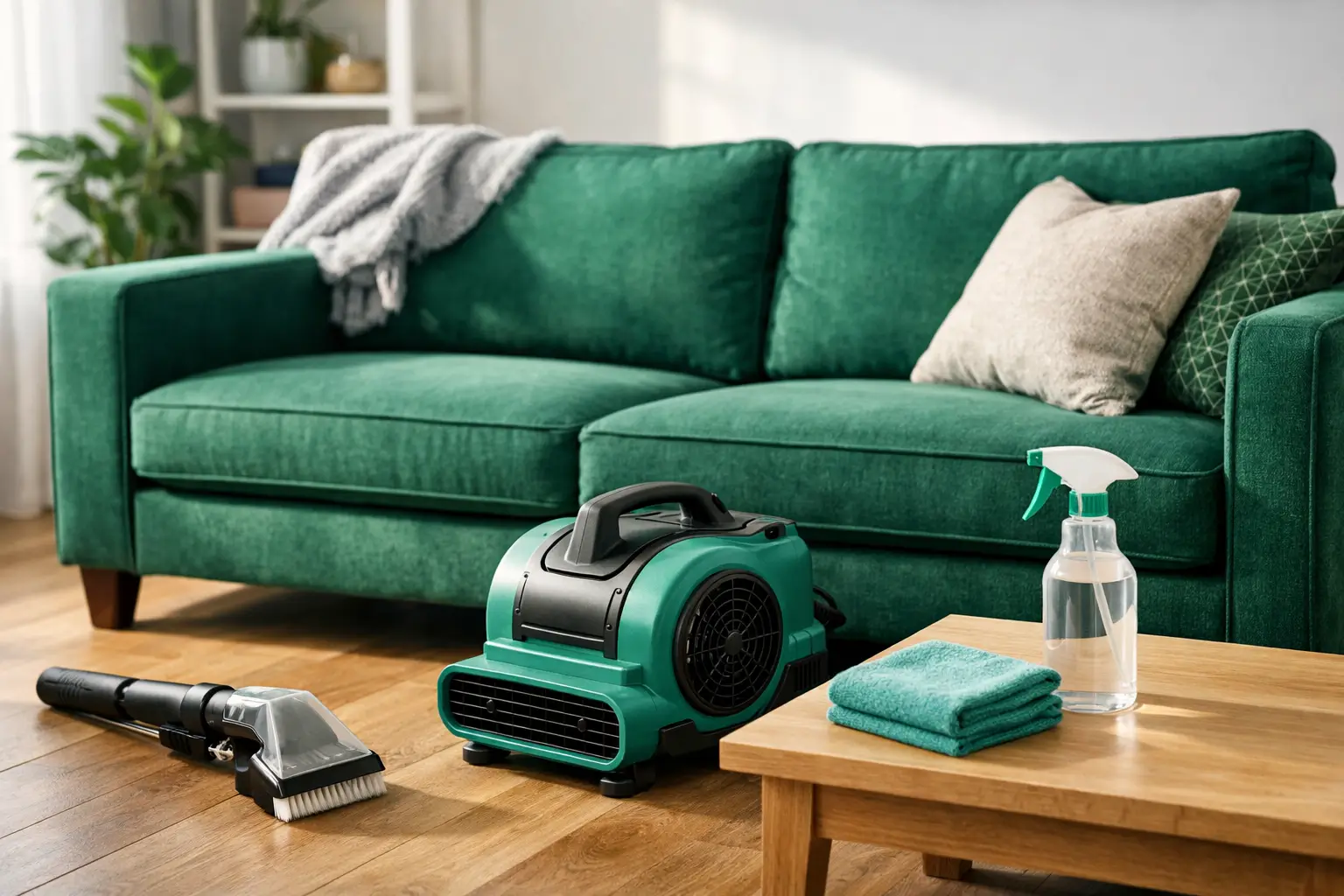
Your sofa must be the most used piece of furniture in your home. Whether you are having a family get-together or planning a movie night, sitting on the sofa just remains constant.
Over time, your sofa fabric can collect dust, odors, and stains from spills. According to the Asthma and Allergy Foundation of America, one tiny dust particle can contain up to 1 million dust mites that can create potential respiratory problems, eye allergens, and other health problems.
If you are searching for how to clean a fabric sofa at home, then you are in the right place. This guide is designed to help you achieve safe and easy sofa fabric cleaning with simple steps. Grab your coffee and sit on your favorite couch, and read the helpful guide below!
Why Proper Sofa Cleaning Matters
The sofa is a hub of activity in your home or office. This piece of furniture has to bear coffee spills, pet hair, food particles, and many deeply embedded allergens. Cleaning your sofa is not just an ordinary home chore; think of it as sofa maintenance that contributes to a healthy living environment at your home.
Regular cleaning will not only make it look clean but also offers several other benefits, such as:
- Giving a longer life to your furniture
- Reduces unpleasant odors
- Prevents stains and discoloration
- Helps maintain a healthier home environment
- Improve indoor air quality
A fabric sofa or upholstered couch faces daily exposure to:
- Food crumbs and drink spills
- Pet hair and dander
- Dust mites and allergens
- Body oils and odors
What Type of Sofa Fabric Do You Have?
The best way to clean a fabric sofa is to first find your sofa’s fabric type. There is a tag on each sofa set hiding under cushions that explains which method and products are safe for cleaning. Find it first and then choose your cleaning tools and techniques.
Pro Tip: If you cannot find any tag, then do a patch test on a hidden area first to avoid any color damage.
These are some sample tags and their meaning:
| Code | Meaning | What You Can See |
| W | Water-based cleaning safe | Water & mild cleaners |
| S | Solvent only | Solvent-based upholstery cleaners |
| WS | Both water & solvent cleaners | Flexible cleaning options |
| X | Vacuum only | No liquids, professionals recommend |
Things You Need Before Cleaning
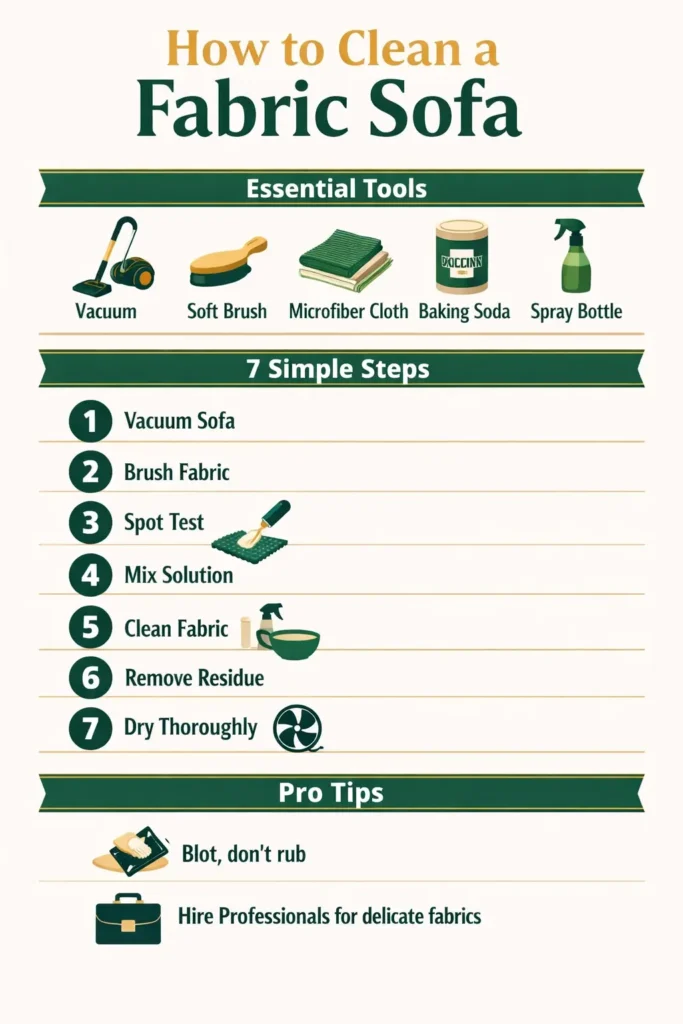
Preparation is the key to having a smooth sofa cleaning. The following are the must-haves for your DIY sofa cleaning at home:
- Vacuum with upholstery tool
- Soft brush
- Microfiber cloths
- Dish soap and water
- Baking soda
- Spray bottle
- White vinegar (optional)
- Upholstery shampoo (optional)
- Enzyme cleaner (for pet stains)
- Steam cleaner (for deep cleaning, if fabric allows)
Get 20% Off Today!
Book our professional cleaning services today and get 20% off for a sparkling space.
Book NowSteps to Clean Your Fabric Sofa
If you want to clean a fabric couch at home, then follow these simple and easy-to-operate steps for efficient results. Incorporate sofa cleaning in your daily smart cleaning schedule if you are working mom.
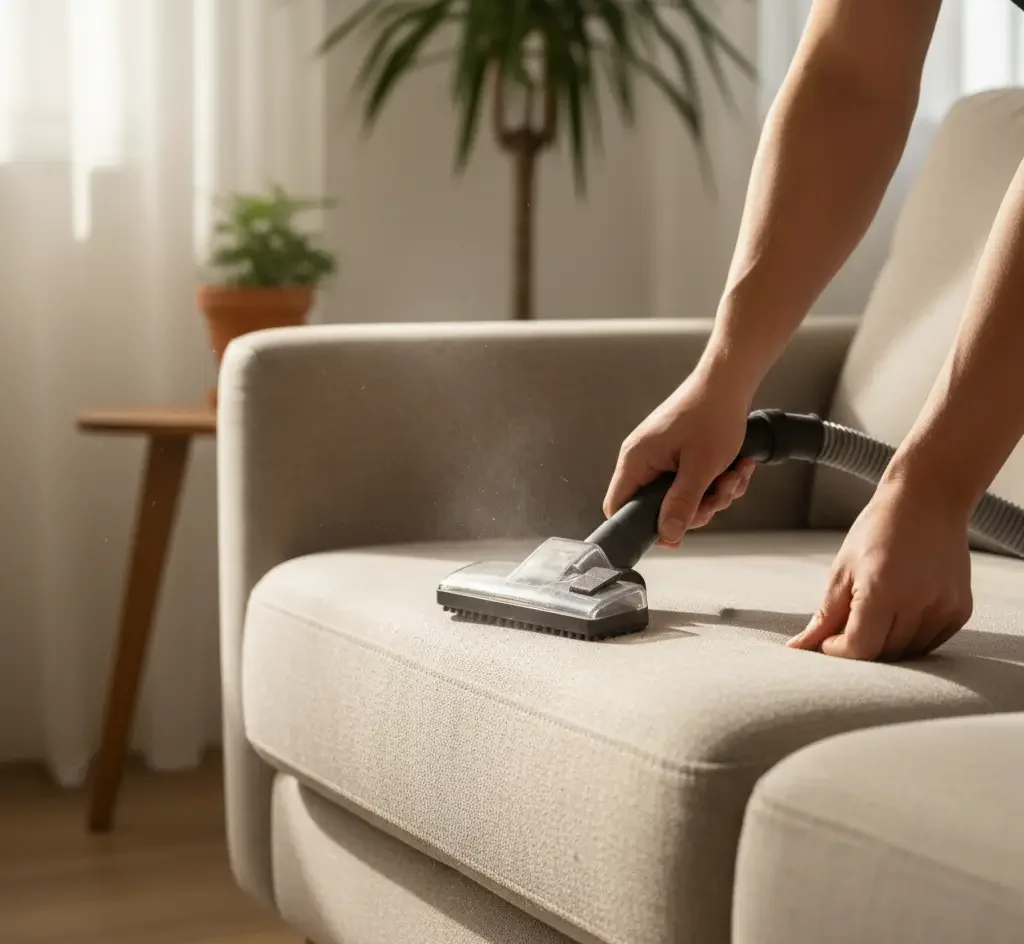
- Vacuum Every Surface First
Use upholstery attached to vacuum the entire sofa, including arms and back. Vacuuming first will help you remove 70% of surface dirt and food particles on your sofa.
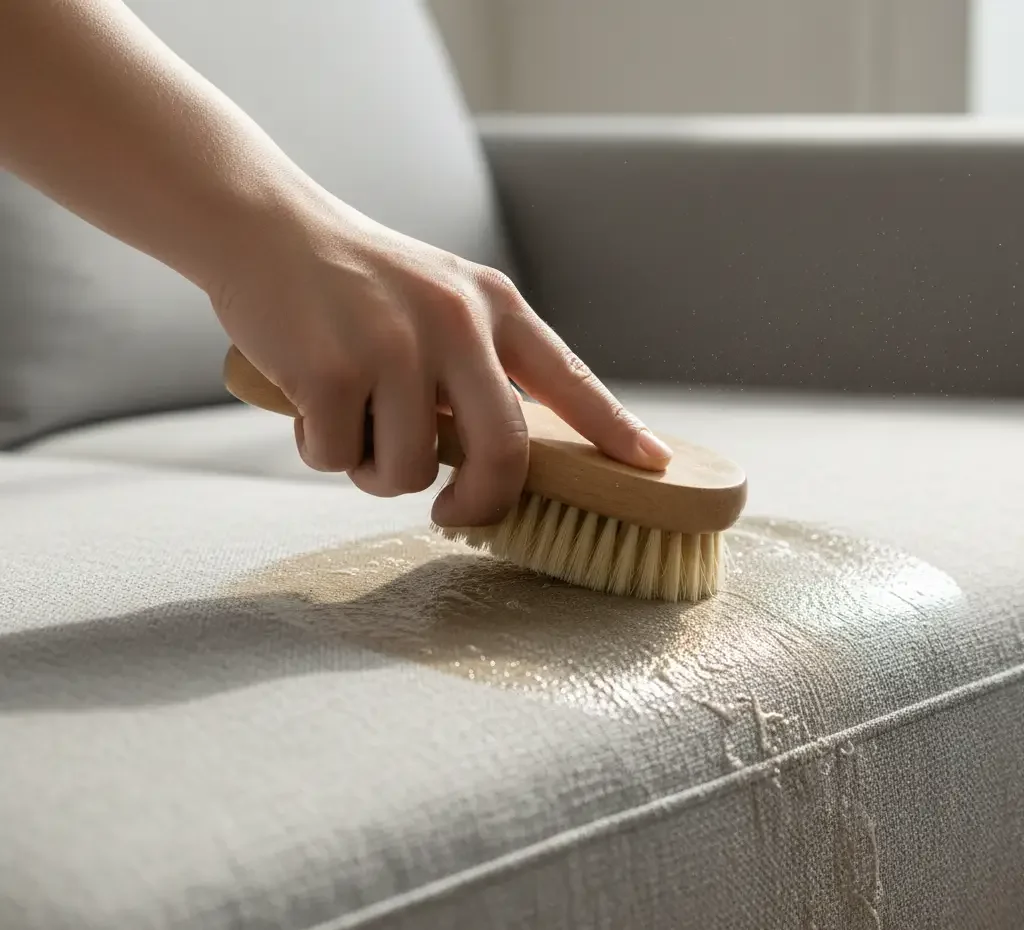
- Brush or Shake Loose Debris
Use a gentle brush to lift trapped particles on your sofa. Do brush before adding any moisturiser to prevent muddy residue on the sofa.
- Spot Test Your Cleaner
Checking your sofa tag is essential, but do not neglect doing a spot test on a hidden area first. It will help prevent colour fading or fabric damage.

- Mix Your Cleaning Solution
Mix warm water with mild dish soap and optional white vinegar into a spray bottle. This DIY sofa cleaning solution is proven and tested for water-safe sofa fabrics.

- Clean the Fabric
Lightly miss the surface of your sofa. Use a soft brush to gently scrub the surface. Working in circular motion is preferred for better results.
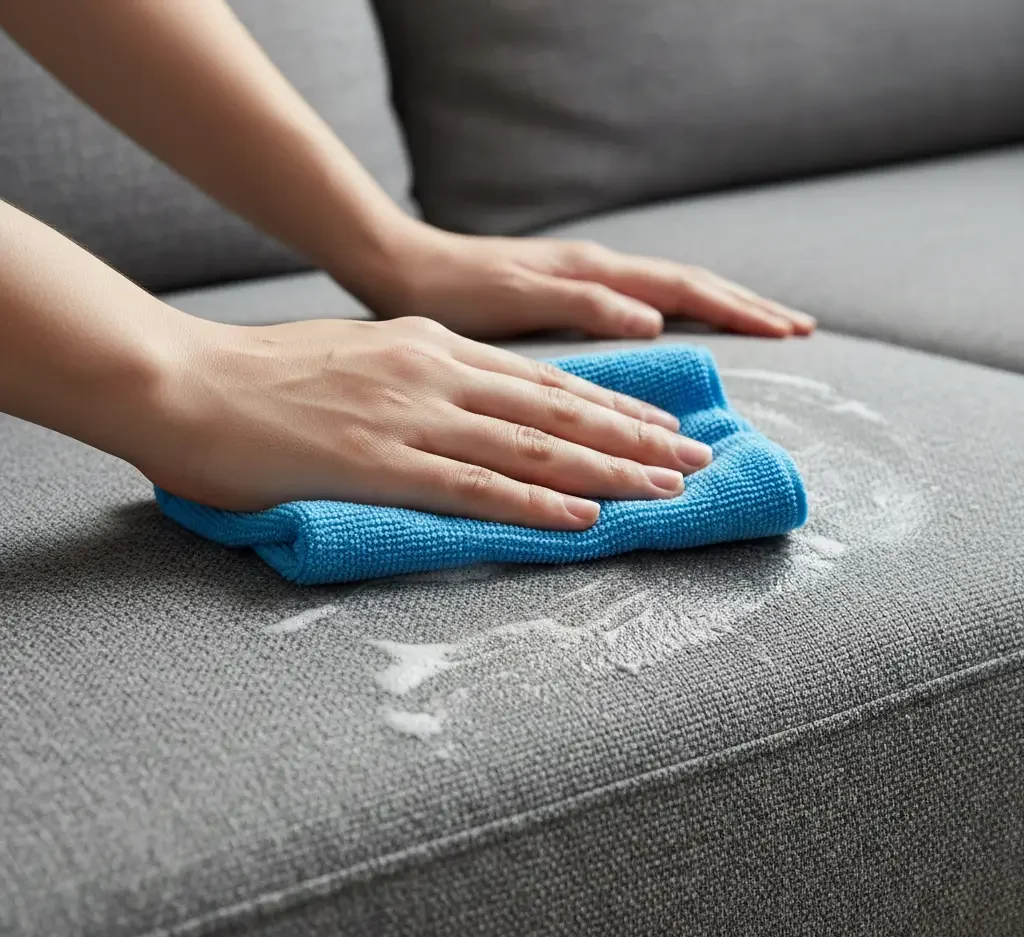
- Remove Soapy Residue
Wipe away the detergent and crime by using a damp cloth. Make sure to remove residue completely, as leaving it can attract dirt faster.
- Dry Thoroughly
Use a dryer or turn on the fan to dry your sofa. Keep your doors and windows open for a better airflow. Avoid sitting on the sofa cover until it’s fully dry, as it can cause odors.

How To Remove Stains From A Fabric Sofa
The inside is to never rub any stain, but always blot lightly.
Food And Drink Spills
- Blot immediately with a clean cloth
- Use a mild soap + warm water solution
- Rinse with a cloth and dry
Grease and Oil
- Sprinkle baking soda or cornstarch
- Let it sit to absorb oils, vacuum up
- Gently clean with a mild soap solution
Ink & Dye
- Use rubbing alcohol on a cotton ball
- Dab lightly (don’t scrub)
- Rinse and dry
Common Cleaning Mistakes People Often Make
If you are doing upholstery cleaning at home, then make sure to avoid these errors. Neglecting them can leave permanent marks on your sofa.
- Soaking the fabric in water
- Rubbing stains instead of blotting
- Ignoring label cleaning codes
- Skipping a spot test
- Using harsh chemicals that fade fabric
When Should You Clean Your Fabric Sofa?
The frequency of cleaning your sofa fabric depends on its usage. Routine care can prevent so fast stain remover from becoming an emergency task. Many social media users claim to clean their sofa once or twice a week after heavy use, but some reported cleaning it once a year because they don’t eat on it. Here are some sofa cleaning times categorised to make it easy for you.
- Weekly: Do light vacuuming to keep dust away
- Monthly: Deodorize stains with a DIY baking soda solution
- Every 3-6 Months: Deep cleaning the fabric sofa after every three months is preferred
- Annually: Professional fabric sofa cleaning should be considered
DIY Sofa Cleaning vs Professional Sofa Cleaning
| DIY Cleaning | Professional Cleaning |
| Low cost | Higher cost |
| Good for light stains | Removes deep stains & odors |
| Risk of fabric damage | Fabric-safe methods |
| Limited tools | Industrial-grade equipment |
Choose professional services if stains persist or fabric is delicate.
When To Hire Professional Fabric Sofa Cleaning Services
Sometimes DIY cleaning methods are not enough to keep your sofa in good condition. If you have tried at home and stains and orders persist, then this is your sign to hire professionals like Emerald Cleaning Services. They use advanced tools and eco-friendly solvents safe both for your sofa fabric and home environment. Here are some signs you should consider professional fabric sofa cleaning
- The sofa label shows X (vacuum only)
- Stains are deep or persistent
- You’re dealing with delicate or specialty fabrics
- There’s mold, pet urine, or strong odors
- You want a deep-clean fabric sofa that restores like new
Tips To Keep Your Fabric Sofa Clean Longer
Prevention is always better than cure, same is the case with keeping your sofa cleaning a part of your daily routine. Here are some fabric sofa cleaning tapes that will help you reduce the need for frequent deep cleaning.
- Use washable throws or slipcovers for high-traffic spots
- Rotate and flip cushions monthly
- Avoid eating or drinking on your sofa
- Groom pets regularly and use pet-specific cleaning tools
- Use fabric protector spray
- Maintain airflow in the room
Conclusion
Having a clean sofa is the dream of every homeowner. It is necessary to learn how to clean a fabric sofa effectively if you want to protect your investment and maintain a healthy environment. This is only possible with the help of the right tools and techniques.
Ready to make your sofa look like new? Start with a vacuum, mix DIY, and you are ready to go. Hire professional cleaners if you think the condition of your sofa is out of your control!
Still Have Questions? Here Are Some Helpful Answers
Can I steam clean a fabric sofa?
Yes, you can steam clean a fabric sofa, but only if the fabric allows it.
First, check the cleaning label on your sofa. If it says W or WS, steam cleaning is usually safe and can be a great way to remove deep dirt, bacteria, and odors without harsh chemicals.
That said, always test on a small hidden area before doing the whole sofa. Some fabrics don’t react well to heat and moisture and may shrink or fade. If your sofa has delicate fabric or an “X” code, it’s better to avoid steam and go for professional cleaning instead.
How long does a sofa take to dry after cleaning?
In most cases, a fabric sofa takes around 4 to 8 hours to dry, but this can change depending on how wet the sofa got and how well your room is ventilated.
If your home has good airflow, it may dry faster. You can help speed things up by opening windows, turning on fans, or using a ceiling fan. Just make sure the sofa is fully dry before using it again, otherwise damp fabric can start to smell or even develop mildew.
Is vinegar safe for fabric sofas?
Yes, vinegar can be safe for fabric sofas when used the right way.
When diluted with water, it’s great for removing odors and breaking down light stains, especially grease.
However, it should never be used on delicate fabrics like velvet, silk, or antique upholstery, as it may damage the fibers or affect the color. And just like with any cleaner, always do a quick patch test first to be on the safe side.
How do I remove pet hair from a fabric sofa?
Pet hair can be annoying, but luckily it’s easy to remove with the right tools.
Some of the easiest and most effective methods include:
- Using a rubber brush or rubber gloves – they grab pet hair really well
- A lint roller for quick clean-ups
- A vacuum with a pet hair attachment for deeper cleaning
A simple trick is to lightly dampen the fabric before brushing it helps the hair clump together so it lifts off more easily.